Skip to content
Ian Misner Builder, dad, occasional writer

Start here · a four-source compass or the full briefing

Start here: choose your briefing

Four sources for orientation. Nine when you have the afternoon.

AI is the biggest story of the decade, and a surprising amount of the public argument is still people summarising things they have not read.

Neither route will make you an expert. Expertise comes from doing the work, and reading is not the work. What this does is more modest and more useful: it gets you to where you can follow the conversation, check claims against primary sources, and notice when someone is bluffing. Four deeper tracks after this one, plus Keep Current. Every entry says what the source actually argues before you click it. Links go to real sources, never to searches.

Along the way there are six optional, ungraded demonstrations and a few easter eggs: fun, not homework, and none affects your progress. You can read without an account. Signing in lets you carry progress across devices, keep private notes and saved sources, and use the optional AI demonstrations and grounded reading-map chat. There is also an unchecked email option for occasional reminders and major Frontier AI updates; no reminder schedule is promised.

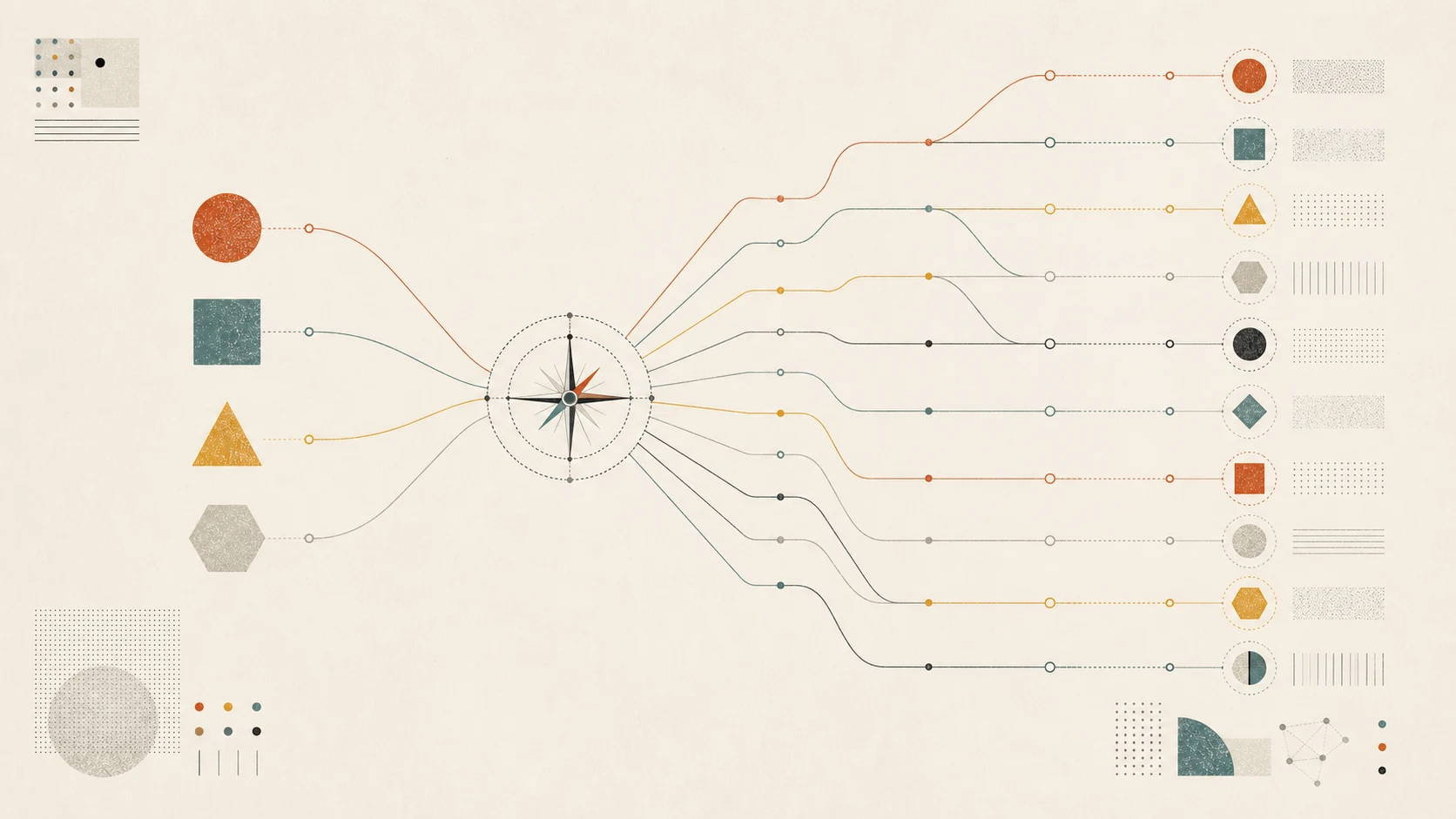
Four source routes converging into an orientation map, then branching into deeper tracks.
Send this to someone For the person who keeps asking whether AI is all hype or all doom. No progress report required.

116 sources · 4 core tracks · one maintenance layer. 103 are free outright. 1 mixes free and paid material. 8 are available through a library. 3 require renting or streaming. 1 is paid and optional.

Choose the useful amount

Two ways through this track

Basic orientation 4 sources. A shorter route through the load-bearing ideas.
0 of 4 in this route
  1. But what is a GPT? Visual intro to transformers
  2. Artificial Intelligence
  3. Measuring AI ability to complete long tasks
  4. International AI Safety Report
How to read the cards
free some paid library card rent or stream paid
Core read first Reference look things up Risk case / Skeptical argues one side Both sides argues with itself Off axis outside the meter Fiction intuition pump Follow-up keep going
A check means encountered, not mastered. Shared sources stay checked everywhere.
Stage 00

First, know what is making the sentences

Do not start with vibes. Start with the machine doing the trick, because once the trick is visible, half the discourse gets less mystical and the other half gets more interesting. This is the warm-up lap, not the monastery.

S01 3Blue1Brown · 2024 · Video

The best short explanation of transformer mechanics in any medium: embeddings as directions in space, attention as tokens updating each other's meaning, softmax at the end. You will not be able to implement one afterward, and you will understand every subsequent conversation better.

What to do Watch it once at normal speed, on the page, without taking notes. Then rewatch only the attention section and say out loud what a single attention head does to one token. Replay that section if the explanation still feels slippery. That sentence makes the rest of the map easier to follow.

Also in How it works.

27 min YouTube · free

Ask the map

Log in to ask questions against the full reading map.

Log in to ask

Aggregate usage diagnostics are stored; your question and answer text are not.

Stage 01

Then check the scoreboard

Capabilities, costs and trend lines before prophecy. The important habit is boring in the best way: look at the live measurements, notice who made them, and keep one hand on your wallet when a chart arrives wearing a cape.

S02 Our World in Data · updated · Topic page + charts

A broad public data layer for the whole subject: investment, compute, model capability, adoption, public opinion and timelines, with reusable charts and citations. It is less inside-baseball than the lab documents and therefore useful early, before the acronyms begin breeding in the walls.

What to do Open three charts, not thirty: investment, model capability over time, and public opinion. Save each one with its citation visible. Those are the three you will want when somebody quotes a number at you, and the citation trail is the reason you can defend them. Return whenever you need a chart rather than a fact.

20 min ourworldindata.org · free

AI Index Report

Reference

S03 Stanford HAI · annual · Report

The field's annual census: capability, investment, adoption, cost, policy and public opinion, all sourced. Skim the top takeaways on release, then use it year-round as the reference whenever someone quotes a number at you. The adoption-versus-measured-value gap in the economy chapter is the most interesting figure in it and the one most often skipped.

What to do Read the top-level takeaways, then go straight to the economy chapter and find the gap between reported adoption and measured value. Note that gap as a number. Come back to the rest only when you need a citation — never cover to cover. Skim the takeaways again each year on release.

Also in Costs and applications, Keep current.

20 min–2 hr hai.stanford.edu · free

S04 Epoch AI · continuous · Dashboards

Training compute, hardware price-performance, algorithmic efficiency, inference cost and data supply, as live charts. Two facts do most of the work elsewhere: frontier compute has grown several-fold annually for a decade, and the cost of any given capability falls fast once it exists.

What to do Two curves on the first pass and ignore the rest: training compute over time, and inference cost for a fixed capability. Note the doubling time on the first and the decline rate on the second. Those two numbers quietly settle most later arguments about cost and timelines.

Also in Costs and applications.

15 min epoch.ai · free

S05 Kwa, West, Becker et al. (METR) · 2025 · Paper

The 2025 paper reports a roughly seven-month doubling over six years. Its higher-reliability horizon is materially shorter, and current estimates are sensitive to task-suite and modelling choices.

What to do Read the abstract and the time-horizon figure, then go straight to the 80% reliability curve and note how far behind the 50% curve it sits. From then on, every time you meet this paper cited elsewhere, check whether the citation mentions that gap. Most do not. Noticing is the skill this source is teaching.

Also in How it works, The risk argument.

30 min metr.org · free

GDPval

Reference

S06 OpenAI · 2025 · Evaluation + paper

An attempt to measure economically valuable work instead of exam-shaped cleverness: realistic deliverables across 44 knowledge-work occupations, judged against expert outputs. The limitations matter as much as the scores, because the real world cruelly insists on iteration, ambiguity and people changing their minds after lunch.

What to do Skim the occupation list and one example deliverable, then read the limitations twice as carefully as the results. Note one thing about your own job that this eval structurally cannot capture. That sentence is a useful boundary on what the result means.

Also in How it works, Costs and applications.

20 min openai.com · free

Stage 02

Now let the argument bite

This is the compressed version of the whole fight: institutional middle, maximal alarm, serious skepticism. Read all three before deciding you have found the grown-up in the room. The room is mostly grown-ups disagreeing at high speed.

S07 chaired by Yoshua Bengio · 2026 · Report + key updates

Over a hundred experts nominated by thirty-plus countries plus the EU, UN and OECD, with Key Updates through the year when capabilities move. Its most valuable feature is structural: it separates established from contested from speculated and refuses to collapse the third into the first. Read the four-page executive summary, then audit anything you believe confidently against which category it falls in.

What to do Read only the four-page executive summary first. Then pick three claims you currently hold with confidence and find which bucket the report files each in — established, contested, or speculated. Anything you believe confidently that sits under speculated is the finding. Re-run this against the Key Updates when they land.

Also in The risk argument, Keep current.

25 min–3 hr internationalaisafetyreport.org · free

S08 Eliezer Yudkowsky, TED · 2023 · Talk

The maximalist case compressed past politeness: we do not know how to give a system any particular goal, we get one attempt, and the failure mode is everyone dying. Argues the current paradigm cannot produce a mind that likes us because we can neither specify nor inspect what we are building. Calls for an indefinite worldwide moratorium enforced by international agreement.

What to do Watch on the page. Try distilling the argument into three claims and one policy ask, in his terms, without softening any of them. You are going to meet rebuttals to this later, and you want to be able to check whether they are rebutting what he actually said.

Also in The risk argument.

12 min TED · free

S09 Narayanan & Kapoor · 2025 · Essay

Separates AI methods from applications from adoption. Methods can improve exponentially while the other two move at institutional speed, and historically always have: safety-critical domains resist, regulation binds, liability attaches, infrastructure lags. Concludes that superintelligence discourse mistakes capability for power, since power requires the world to reorganise around you and the world is slow and full of humans with lawyers. Read part one for the briefing; the whole thing later.

What to do Read part one only, then stop. The move to learn is the three-way split between methods, applications and adoption. Afterward, take any timeline claim you have heard this month and say which of the three it is actually about. Most are about methods and get quoted as though they were about adoption. Save the full essay for the risk track.

Also in The risk argument.

15 min–1 hr 30 min Knight First Amendment Institute · free

Cost: free · some paid · library card · rent or stream · paid.

Videos and PDFs can open in place. Everything else opens at the original source in a new tab.

This is a snapshot of a field that moves monthly. Keep current is the maintenance layer.