

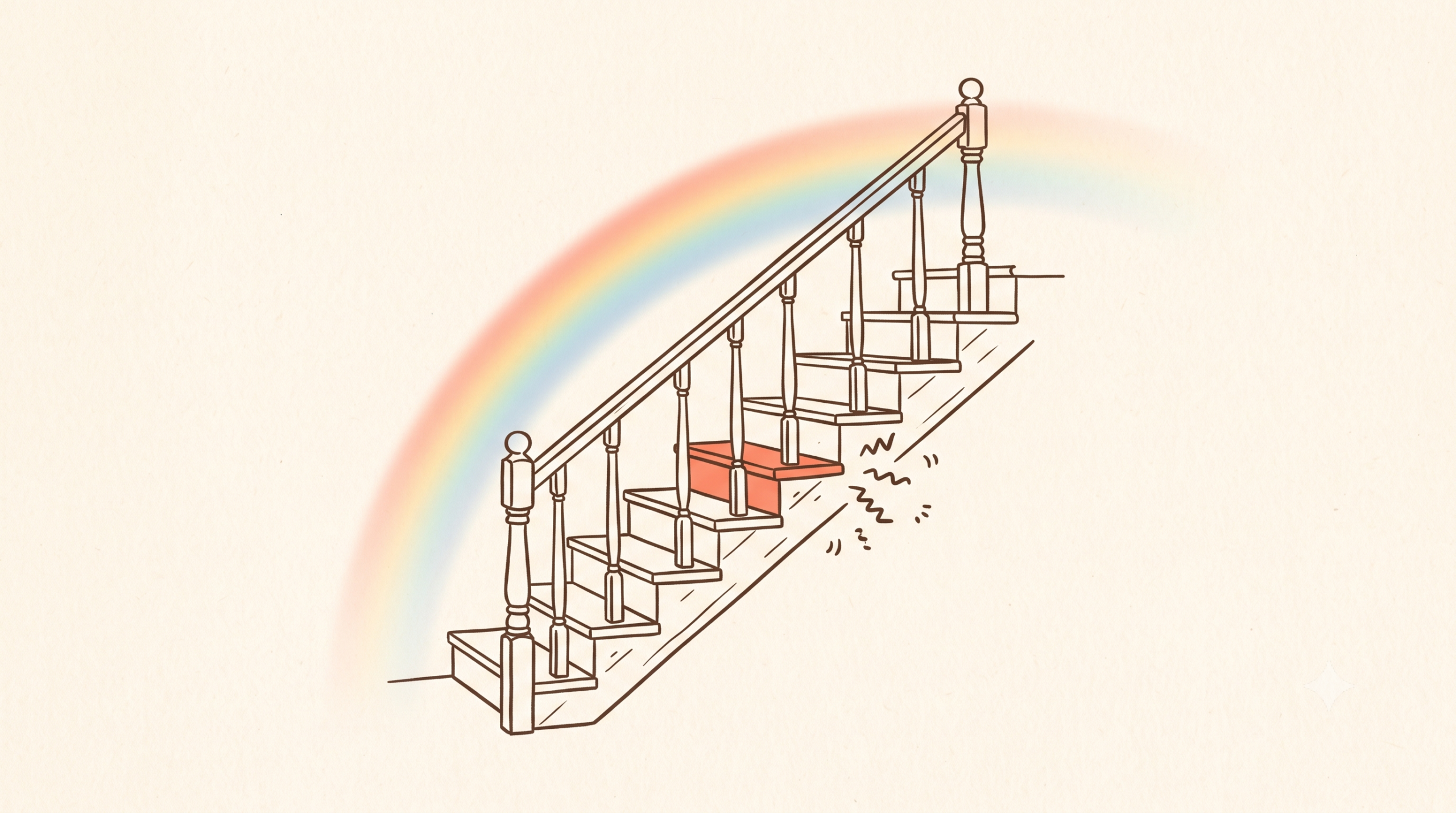
When we had two kids, we had a system, and the system was simple: one of us per kid. Man-to-man. If both of them cried, both of them got picked up, because there were two of us and two of them and the math worked. I thought that was parenting. It was actually just having enough coverage to pretend there were no hard decisions.
Then we had a third, and the math stopped working.
You can’t play man-to-man with three kids and two adults. You switch to zone. You stop covering children and start covering space. The top of the stairs, the thing with the sharp corner, whoever’s gone suspiciously quiet in the other room.
And the brutal part of zone defense is that when two of them are crying, you have to decide which cry is load-bearing. One of them is hurt. One of them is crying because her brother looked at her a little weirdly. You learn fast to tell the difference, because you can only get to one.
That’s the entire lesson of technical debt, and nobody tells you it’s the lesson.
We had a fourth, then a fifth, then a sixth, and here’s what I didn’t really expect: it wasn’t harder.
Once you’ve already given up on man-to-man, once you’ve accepted that you cover zones and triage cries and let the survivable problems survive on their own for a minute, more load is just more of the same. The machine already broke a while ago. It wasn’t quite perfect already. The hard part was dealing with the initial breaking of it. Everything after was volume.
This is true of a codebase or a company too. The painful moment isn’t the hundredth TODO. It’s the first time you accept you will never fix all of them, that “we’ll get to it later” is something you’re saying to be polite.
Before that you’re playing man-to-man with your own code, believing every bug deserves a fix and you’ll personally deliver it. After that you’re playing zone. You triage. You learn which warning is a kid who’s actually hurt and which is a kid whose brother looked at them.
The squeaky stair has been squeaking for four years. I know exactly which one it is. I step over it in the dark without thinking. I’m never going to fix it. It’s a decision I made on purpose and have re-made every day since. Most of my technical debt is that stair.
And then there’s number seven.
Four, five, and six were the same job at higher volume. Seven is different in a way I genuinely can’t explain. Nothing in the system changed (same zones, same triage, same tape holding everything together), but something hit a limit the previous six didn’t. I keep waiting to figure out what it is.
Maybe there’s a number where the abstraction you built to survive just quietly stops scaling and doesn’t tell you why. Maybe every system has one, and you only find it by crossing it. I haven’t worked out what changed at seven.
This is still about technical debt.
Leave a Reply