Frontier AI Orientation is a free, source-backed map for people who want to understand advanced AI without pretending certainty. It starts with nine sources in about three hours, then branches into technical foundations, evaluations, frontier tracking, building, infrastructure, applications, policy, the full risk argument, and a maintenance layer. Readers can track progress, save private notes, share Wordle-style checkpoints, and ask a chatbot grounded in the curriculum and the sources they have completed.
The anti-vibes AI syllabus: primary sources before conclusions.
A risk reading list that tracks what you read instead of scoring what you believe.
What a normal, technically curious person needs to read before the jargon becomes useful.
A personal learning record that becomes private notes, a notes-only lesson, and a shareable checkpoint.
Can one line of nonsense really make an AI build Pong?
Five screenshots
Use these in coverage
Click any image for the full-size JPEG. The risk-meter capture uses a balanced demonstration reading state.
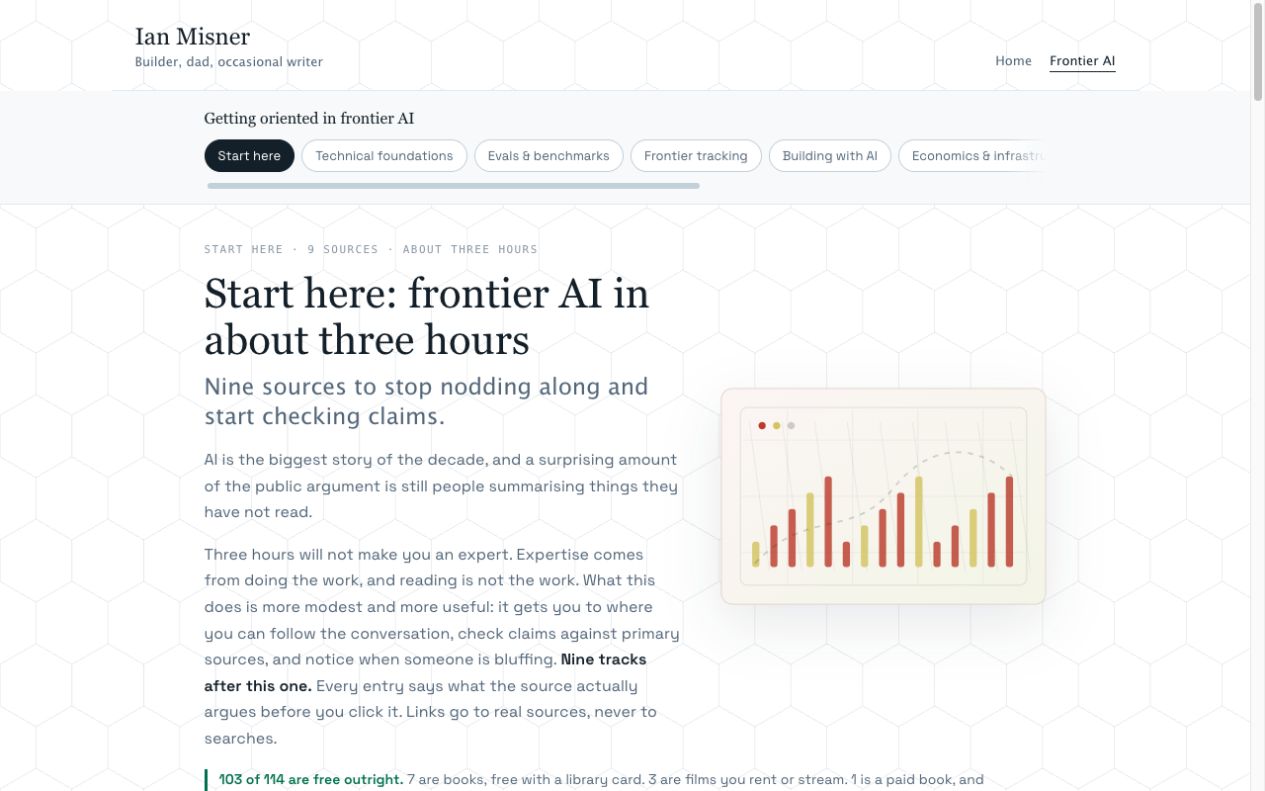
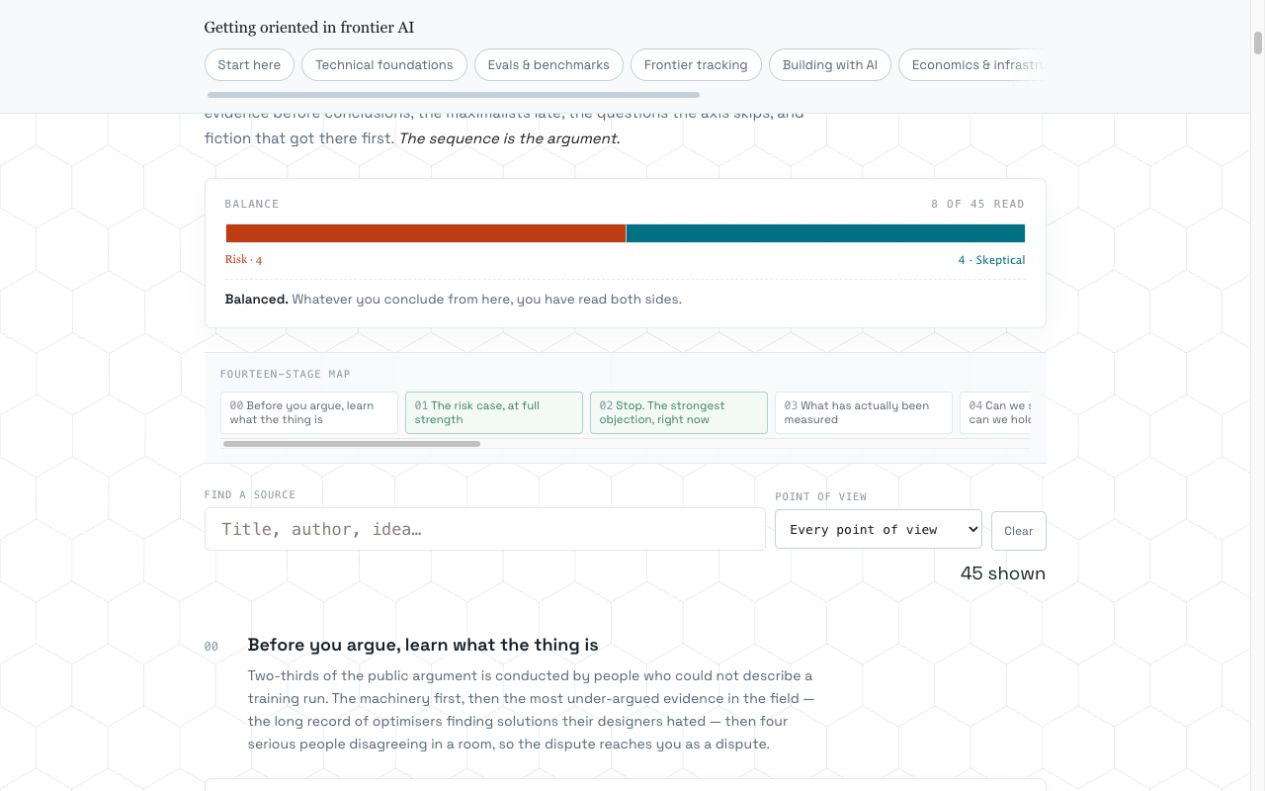
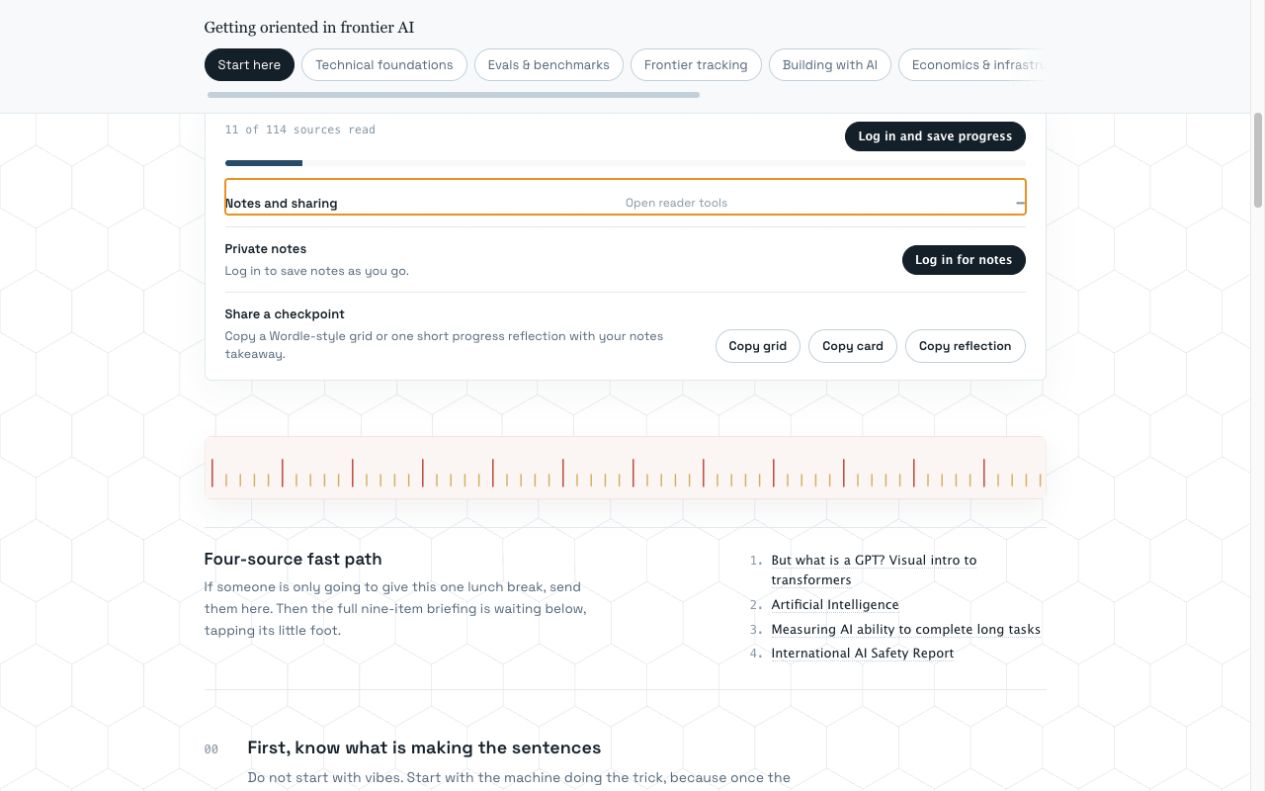
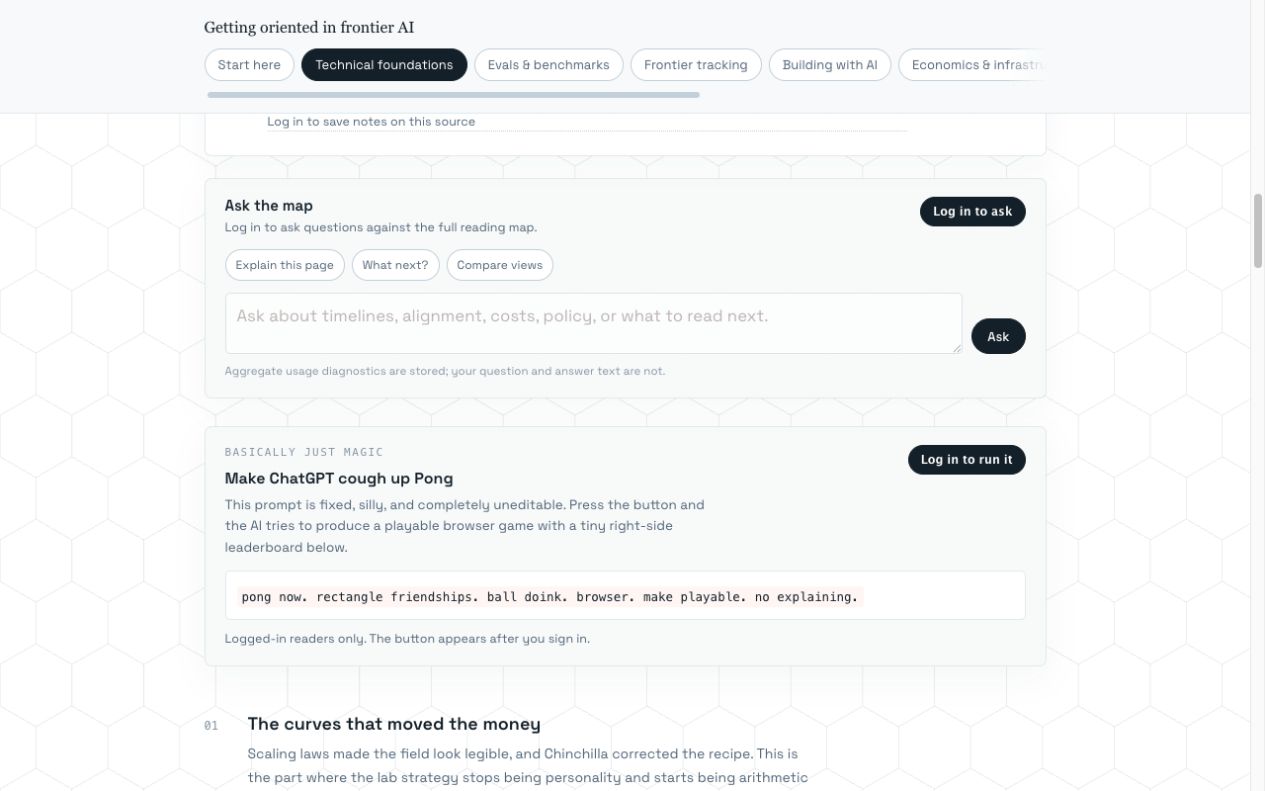
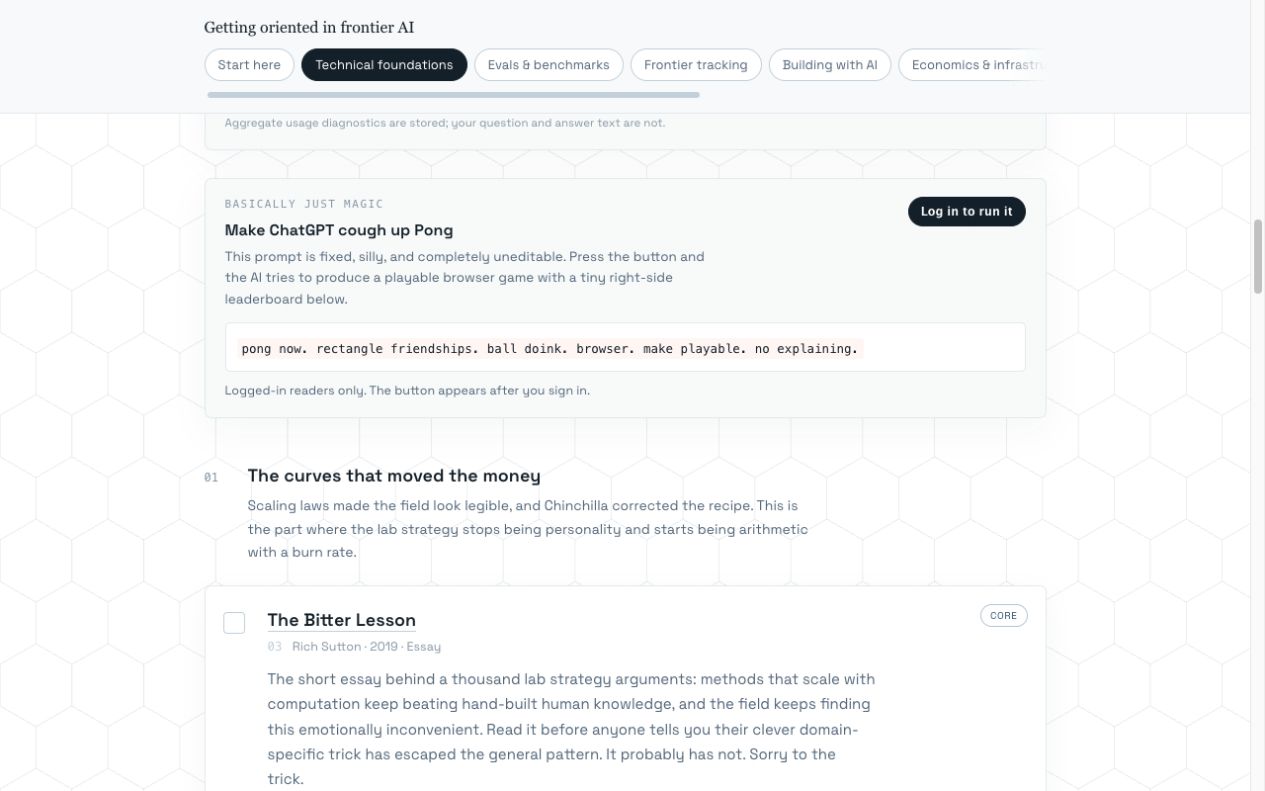
The three-hour front doorStart Here gives a curious person nine sources before asking them to pick a deeper track.Download JPEGThe risk meterIt measures which arguments someone has read, not what they are supposed to believe.Download JPEGProgress worth sharingA reading checkpoint becomes a grid, an image card, or a short reflection with a link back.Download JPEGAsk the mapThe logged-in chatbot answers from the reading map and the sources that reader has completed.Download JPEGThe Pong magic promptOne absurdly small, fixed prompt asks the model to make a playable browser game. Basically just magic.Download JPEG
Copy and paste
Segment introductions
Short enough to read aloud, plain enough to rewrite without doing violence to a sentence.
01
General orientation
Most AI arguments start at the conclusion. Frontier AI Orientation starts with nine sources you can finish in about three hours, then branches into the machinery, evaluations, economics, applications, policy, and the full risk argument.
02
Risk and disagreement
The clever part of this AI risk reading list is that it does not ask what you believe. It tracks which side you have actually read, then points out when your evidence diet is drifting.
03
Builders
If you know how to use ChatGPT but not why any of this works, the technical track walks from transformers and scaling laws through RLHF, tool use, agents, and the practical work of shipping systems that do not quietly fall over.
04
Progress and notes
Every source can be checked off, annotated privately, and turned into a shareable progress grid. Once enough notes exist, the AI produces a short lesson using only the reader's own notes.
05
Pong
This may be the least dignified AI demo in the curriculum: one fixed prompt says "pong now. rectangle friendships. ball doink." and asks the model to return a playable browser game.